Editor's note: The identity of some of those quoted in this piece has been kept confidential.
(CNN) -- Lynne was driving home late at night after a
trip out of town when it hit her. She had to share her story of
surviving rape, to reach out and reassure other women who had been
through the same traumatic experience that they were not alone.
CNN iReport asked people
to send in their personal testimonies of surviving rape after the recent
controversy over comments made by U.S. congressman Todd Akin, who said
in an interview that women's bodies could naturally prevent pregnancy in
the case of "legitimate rape."
The request led to a
flood of soul searching and often passionate responses from women such
as Lynne who have survived such an assault.
More than 40 people sent
in stories from across the U.S. and beyond. Some had not spoken of what
had happened to them, even to their own families; others used the
traumatic experience to go public to inform and reassure others. Many
were angry; others were reflective over what had happened. Some spoke
of, inasmuch as it was possible, coming to terms with what they had
survived, while for others, emotions were still as raw as the day they
were assaulted.
Because some perceive
negative connotations in the term "victim," many of those affected, and
the organizations and individuals who support them, prefer the term
"survivor."
Catherine, from Canada,
was attacked as a freshman in college by a man who offered to walk her
home from a party. She said Akin's comments harkened back to darker
times when women's rights were of little consequence.
"Don't define to me
what's legitimate or not legitimate just because I didn't fight back,"
she said. "These are attitudes that we should have left in the 1900s."
This year, the U.S.
Justice Department revised its definition of rape to mean any kind of
non-consensual penetration, no matter the gender of the attacker or
victim. One woman who wished to remain anonymous finds the use of
terminology such as "forcible rape," when rape by its definition is
forcible, particularly egregious.
"I never went to the
police. My friend told me later that the police would probably say that I
deserved it because I was drunk and flirted with him at the bar that I
shouldn't have been in because I was only 18," she said. "I still think
she believes that I deserved it.
"The question is, would
my story be considered 'forcible' rape? I don't think in ... Akin's case
it would be. I think their definition is a woman being bruised, scared
and bloody."
"Sometimes, a woman has
to do what she has to in order to protect herself, even if it means
having sex with a man she didn't want to and even if she didn't yell to
the top of her lungs about it."
Recovery from the trauma
of rape or sexual assault can take years. Talking about it and sharing
the story of what happened is, understandably, something survivors are
often unwilling to do.
Given the damage to a
rape survivor's psyche, not to mention the physical scars that can be
inflicted, it is not hard to see why such stories remain unspoken for
years.
Dr. Thema Bryant-Davis
is a licensed psychologist and director of the Culture and Trauma
Research Lab at Pepperdine University in California. She sent in her
passionate response to Akin's comments shortly after the controversy
emerged, arguing that such comments invalidate victims, brand them liars
and delegitimize their suffering, all of which greatly affects their
attempts to come to terms with what happened to them.
"It is 2012, and we
continue the legacy that seeks to invalidate victims, to call them in
essence all liars, because if you are pregnant, you are not a legitimate
survivor," she said.
"The silence, the lies and the ignorance must stop."
When asked how they had
coped with the trauma, many iReporters said it was on a day to day
basis. Some mentioned thoughts of suicide; many had had therapy. Others
looked to those to close to them for support.
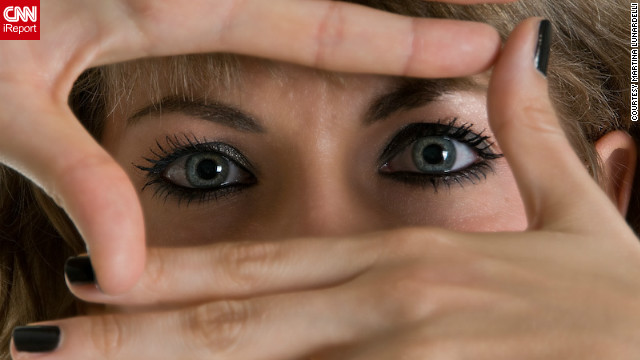
Martina Lunardelli, from Italy, who was assaulted as a child, credited her family and friends for support and assistance.
"I am lucky, because my
whole family has always stayed with me," she said. "And also because I
am surrounded by real men, my dad, my partner and friends, who are
'real' men since they understand the suffering and continuously support
me and stand on the woman's side."
Not all were so fortunate.
"After I was assaulted,
my own dad -- who was from the 'old school' -- chastised me and said
that I must have 'done something to ask for it,' " said Gail from San
Diego.
"Rape is wrong, period.
Men and politicians can try to quantify or qualify it, but only the
victims know the true sting of the crime."
Gail became a chaplain
to support those who had been the victims of such a crime and to offer
the help she felt she was never given by her father.
Indeed, many survivors
had converted their trauma into a chance to support others. Lynne, the
late-night driver, became a nurse. She recalled long nights in bustling
emergency wards assisting vulnerable women who had been assaulted.
"Has (Akin) ever held
the hand of someone who was either raped or the victim of incest?" she
asked. "Seen the crumpled faces, the faces of those they love coming to
the ER? Given someone the morning-after pill and the counseling
information, because it only takes one time to become pregnant, no
matter the setting?"
Catherine, the woman
assaulted as a freshman in college, spoke of using her creativity to
give shape to the emotions she often felt roiling inside her. Through
scrapbooking, painting and poetry, she felt she could exert some form of
calm, of control over the emotions she experienced day to day.
"Take that pain and
transmute it, turn it into art, dance it, sing it, paint it ... you can
make something beautiful out of the trauma, and don't ever let it define
you," she said.
"I'm a rape survivor but also a friend, a daughter, a mother, so much more."
By Sarah Brown, CNN


Post a Comment